Skip to content
Manufacturing Operations12 min readPublished 2026-09-18

Chemical Manufacturing ERP: Formula Security, Batch Potency & Hazardous Goods Compliance

A guide for chemical, polymer, paint, and agrochemical manufacturers: dynamic potency, formula masking, GHS/SDS sheets, and PCB compliance.

AK

Abhishek Kumar

Senior Finance & ERP Systems Architect, Werkora

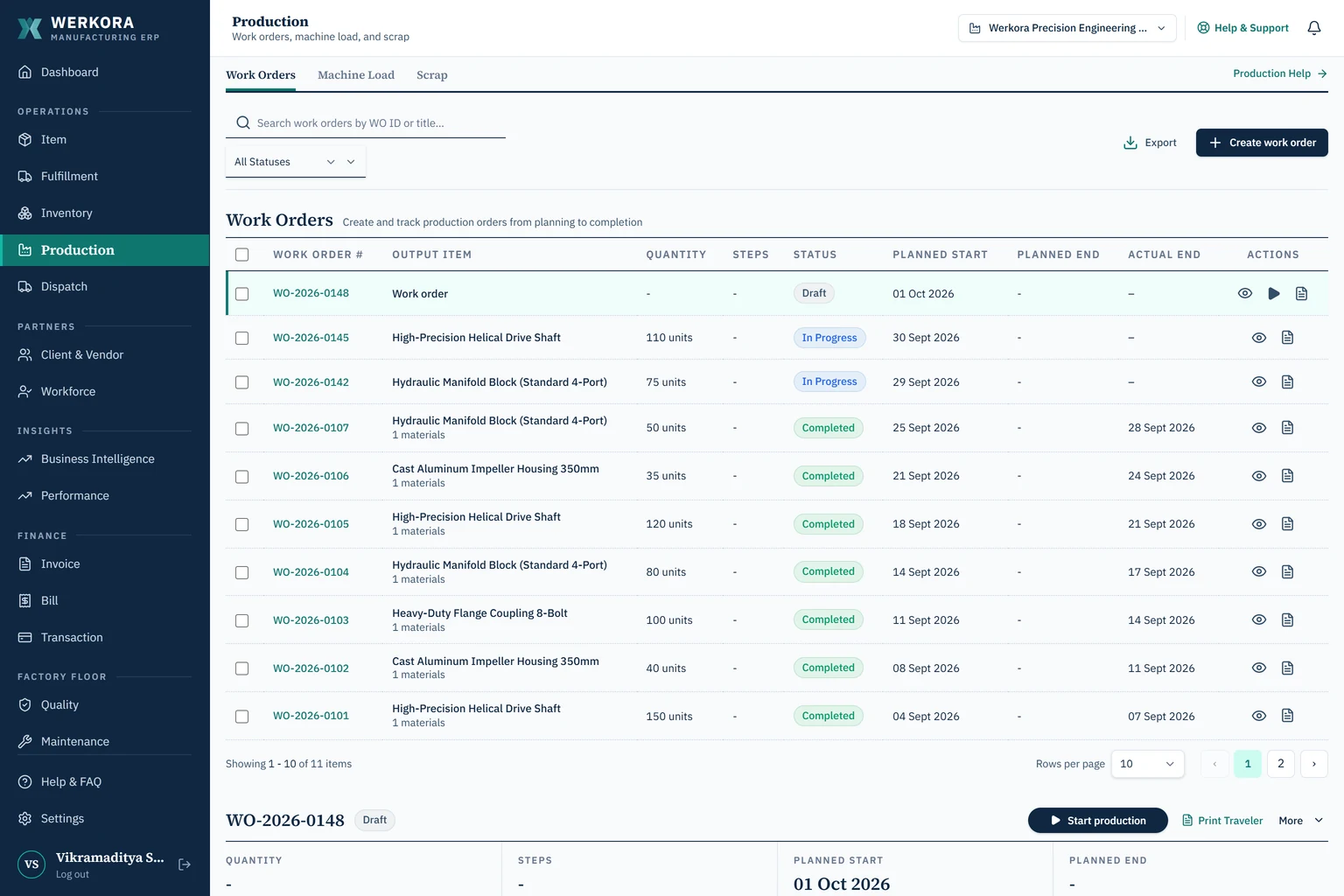
Werkora production module — work orders, BOMs and machine load
AEO Quick Answer & Key Takeaway

A chemical manufacturing ERP must manage recipe formulations, batch yield variances, raw material batch lot tracking, and delivery documentation for industrial and specialty chemicals. Werkora offers structured BOM formulation, batch tracking, and quality inspection controls starting at ₹4,999/unit/mo without per-seat licensing penalties.

Process Realities in Indian Chemical Hubs

India's specialty chemical, dye, resin, and agrochemical sector is concentrated across high-density industrial corridors: Ankleshwar, Vapi, and Dahej in Gujarat; Tarapur and Taloja in Maharashtra; and Pashamylaram in Telangana. These plants operate under stringent environmental oversight from Central and State Pollution Control Boards (CPCB/SPCB) and the Petroleum and Explosives Safety Organization (PESO).

Unlike discrete assembly lines, chemical processing involves continuous transformation: liquids, powders, and gases undergo exothermic reactions, fractional distillation, polymerisation, and filtration in multi-stage reactors. Managing this complexity with entry-level accounting software like Tally or disconnected spreadsheets results in catastrophic batch failures, toxic inventory leakage, and severe regulatory non-compliance.

The Cost of Off-Spec Chemical Batches

In specialty chemical synthesis, a single contaminated or off-spec 5,000-liter reactor batch can cause an immediate direct financial loss of ₹8 Lakhs to ₹25 Lakhs in spoiled raw materials, disposal fees, and hazardous effluent treatment costs.

Formula Security & Intellectual Property Masking

For specialty chemical and coating companies, their proprietary synthesis recipe is their most valuable corporate asset. If an employee copies formula proportions or vendor purity grades, millions of rupees in R&D investment are lost.

Werkora's Multi-Tier Formula Governance:

  • Role-Based Masking: Plant floor operators and batch mix technicians only see alias identifiers (e.g. 'Catalyst K-109') and sequence instructions. Chemical trade names, vendor origins, and percentage formulas remain strictly restricted to authorized R&D heads.
  • Immutable Versioning: Every formula change creates a cryptographically signed revision log detailing the chemist, timestamp, rationale, and lab stability test results.
  • Batch Lock: Once a batch work order is approved for reactor loading, recipe parameters cannot be modified on the shop floor without multi-level managerial authorization.

Active Potency Compensation & Dynamic Batch Sizing

In chemical synthesis, raw materials rarely maintain 100% active assay purity. One drum of raw active substance might have 92% purity, while the next delivery tests at 96% purity.

In a manual spreadsheet environment, the plant chemist must manually recalculate the required weight of active and compensating excipient/filler for every single reactor charge. A calculation typo causes either sub-potent inactive product or dangerous thermal runaway reactions.

Werkora's Dynamic Potency Engine: When an inward lot is approved, the QC lab enters the verified assay purity. When a work order is released, Werkora dynamically recalculates the exact dispensing weights of active ingredients and diluents, ensuring absolute batch consistency and safety.

Eliminate Manual Calculation Hazards

Dynamic potency auto-scaling eliminates operator calculation errors, ensuring identical batch viscosity, pH, and active concentration across fluctuating raw material shipments.

Hazardous Chemical Warehousing & PESO / PCB Compliance

Indian regulatory authorities strictly regulate hazardous, flammable, and toxic raw chemicals under the Manufacture, Storage and Import of Hazardous Chemical Rules:

  1. Segregated Storage Rules: Flammable solvents cannot be warehoused in the same bay as strong oxidizers. Werkora enforces algorithmic bin validation, blocking storekeepers from checking incompatible chemicals into adjacent storage locations.
  2. Threshold Quantity Monitoring: When plant inventory of regulated solvents (e.g. Toluene, Acetone, Hexane) approaches PESO licensed storage capacity, Werkora triggers automated alerts to prevent statutory license violations.
  3. Hazardous Waste & ETP Logs: Track spent acid, distillation residue, and effluent treatment plant (ETP) sludge generation, compiling Form 3 and Form 4 annual hazardous waste returns for the Pollution Control Board automatically.

Drum-Level Barcode Tracking & Co-Product / By-Product Accounting

In chemical plants, materials are stored and moved in 200-liter HDPE drums, intermediate bulk containers (IBCs), and ISO tanks. Every container must be barcoded with:

  • Batch Number & Drum Serial (e.g. Batch #CH-4412, Drum 08 of 25)
  • Tare Weight, Gross Weight, and Net Weight
  • GHS Hazard Symbols & Safety Warnings
  • Manufacturing Date, Retest Date, and Expiration Date

By-Product & Solvent Recovery Accounting: Chemical reactions frequently generate valuable by-products (e.g., sodium sulfate precipitate or recovered ethanol from vapor condensers). Werkora accurately credits the value of recovered solvent back to the primary batch's Cost of Goods Manufactured, providing true unit profitability visibility.

Chemical Plant Economics: Per-Seat vs Unit-Based Model

Chemical processing plants run continuous 24/7 operations with 3 shifts. Shift chemists, boiler operators, drum dispensers, storekeepers, and QC analysts all require system access to log operational parameters.

Under per-user licensing ($20 to $60/user/month), licensing 35 shift workers across 3 shifts costs ₹7,00,000 to ₹21,00,000 per year. To cut costs, plants force 10 shift workers to share a single computer terminal login, destroying individual accountability and traceability.

The Werkora Unit-Based Model: At ₹4,999/unit/month on annual billing (minimum 3 units, 10 users per unit, ₹14,997/month base with 30 users included), every shift chemist, QC analyst, and storekeeper gets their own unique login, preserving complete cryptographic audit defensibility at an affordable, predictable flat cost.
CapabilityWerkora Chemical ERPTally ERP 9 / PrimeTier-1 Process ERP (SAP/BatchMaster)
Pricing ModelUnit-Based (₹4,999/unit/mo · 10 Users/Unit)Per-PC LicensePer-User ($70–$180/user/mo)
Formula Access ControlRole-Based PermissionsNot SupportedComplex Custom Setup
BOM & Yield ManagementStandard BOM & Scrap TrackingManual SpreadsheetNative Module
Batch Lot TrackingBatch & Location TrackingNoneRequires Advanced WMS Add-on
By-Product & Scrap AccountingScrap & Yield AccountingManual Journal EntriesNative Module
GHS / SDS Document GenerationBuilt-in 16-Section SDSNoneSeparate Add-on License

Stop paying per-user software taxes in your factory

Werkora equips every shop-floor supervisor, line operator, storekeeper, and accountant with their own dedicated login with plans sized for your operation.

Frequently Asked Questions

Expert Answers for Factory Operations

How does Werkora handle formulation security?

Werkora provides granular role-based permissions, ensuring that master formulations, raw material costs, and supplier sources are accessible only to authorized administrators and production heads.

What is Active Ingredient Potency Compensation in chemical batching?

Raw chemical actives vary in concentration from batch to batch. In chemical operations, process chemists adjust the required quantity of active and diluent materials to maintain target concentration in the finished batch.

Does Werkora support regulatory delivery documentation for chemical shipments?

Yes. Werkora generates standard GST tax invoices, delivery challans, and captures transport and e-way bill particulars for all chemical dispatches.

How does the system account for recovered solvents and distillation by-products?

Werkora tracks co-products and by-products natively. During reaction and fractional distillation steps, the ERP captures recovered solvent volumes, assigns standard salvage or recycling values, and credits the primary batch cost of goods manufactured.

AK

Abhishek Kumar

LinkedIn Profile

Senior Finance & ERP Systems Architect, Werkora

Senior accountant and enterprise systems specialist with 9+ years of experience across Indian GST/TDS compliance, SAP S/4HANA, Tally Prime, and finance automation. Direct operational background in precision instruments manufacturing and multi-jurisdictional statutory compliance with a zero-penalty record.

Cite this guide
APA, Markdown or BibTeX

Copy a citation to include this guide in your article or report.

Interactive Cost Comparison

Calculate Your Plant's Licensing Savings

Benchmark your current software bills against Werkora's unit-based pricing (10 users/unit · min 3 units).

Projected 3-Year Savings for Your Operation (3 Factory Units · 30 Users)

Save up to ₹6.8 Lakhs over 3 years

Compared to standard per-user seat pricing models like ERPNext ($13.50/user/mo).

Each unit includes 10 active user seats (Operations, Store, Accounts, Planning).

3

Base commitment minimum is 3 units (30 user seats total).

Commitment Term:

Werkora Plan

Werkora

₹14,997/mo (3 Units · 30 Seats)

Annual Cost

₹1,79,964

3-Year TCO

₹5,39,892

30 user seats (3 units × 10)

ERPNext Cloud

$13.50 / user / mo

Annual Cost (30 Users)

₹4,05,816

3-Year TCO

₹12,17,448

Save ₹6.8 Lakhs

TYASuite

₹499 / user / mo (~$6)

Annual Cost (30 Users)

₹1,79,640

3-Year TCO

₹5,38,920

Save ₹0

Zoho Creator

$8 / user / mo

Annual Cost (30 Users)

₹2,40,480

3-Year TCO

₹7,21,440

Save ₹1.8 Lakhs

SAP Business One

$50+ / user / mo

Annual Cost (30 Users)

₹15,03,000

3-Year TCO

₹45,09,000

Save ₹39.7 Lakhs

What's Included in Werkora's Plan (from ₹4,999/unit/mo · Min 3 Units):

10 Users per Factory Unit (30 Users in Base)
Minimum 3 Factory Units Included
GST Tax Invoices & Delivery Challans
BOM Formulation & Scrap Accounting
Customer, Supplier & Ledger Accounting
Batch FIFO Inventory Valuation
Shop Floor Travelers & Operation Routing
Extra Units at ₹4,999/mo (+10 users each)

Plan your ERP budget

Review the ERP buying guide or contact us to discuss the units, users, and deployment options your factory needs.

Related Manufacturing Playbooks

Explore adjacent topics in factory operations, costing, and statutory GST compliance.