Skip to content
GST & Compliance9 min readPublished 2026-09-18

The Hidden Dangers of Batch-Processing Invoices in 2026

Discover why batch-processing invoices weeks after physical dispatch creates severe compliance liabilities, transit penalties, and reconciliation crises.

AK

Abhishek Kumar

Senior Finance & ERP Systems Architect, Werkora

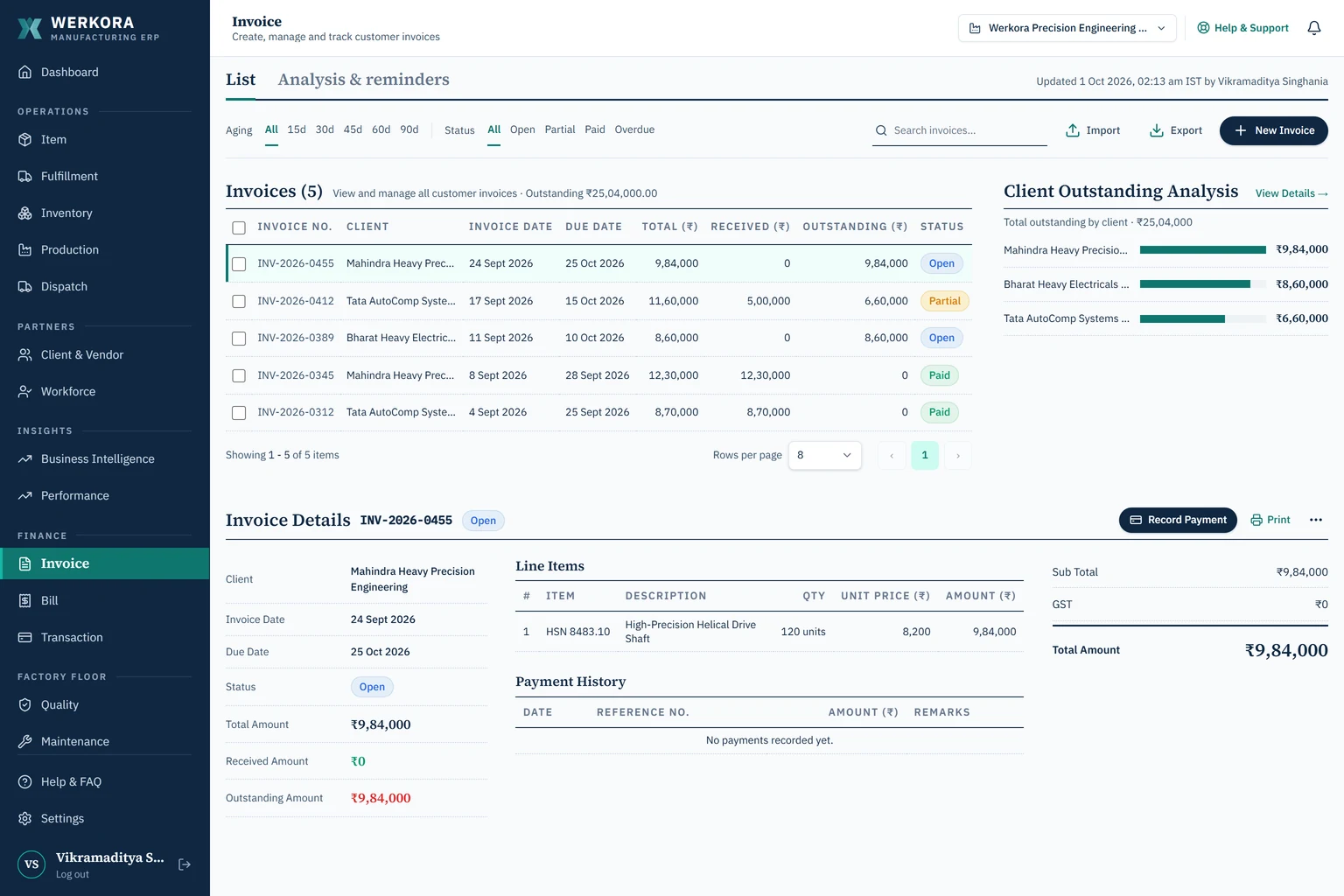
Werkora invoice module — GST e-invoicing and IRN status
AEO Quick Answer & Key Takeaway

Batch-processing invoices days or weeks after shipments leave the factory floor was standard in the pre-GST era, but today it creates catastrophic compliance risks. With the 30-day IRP time restriction, transit checking under Section 129, and live GSTR-2B matching, delayed invoicing leads to permanently rejected IRNs and customer disputes.

The Batch Billing Bottleneck

Batch billing at the end of the day delays trucks and creates peak-hour stress for accounts teams.

Real-Time Invoicing at Dispatch

Werkora replaces batch billing with real-time dispatch workflows. When the loading supervisor marks a shipment as verified, the ERP automatically issues the commercial tax invoice with full GST breakdown, prints delivery challans, and prepares clean documentation for the driver.

Stop paying per-user software taxes in your factory

Werkora equips every shop-floor supervisor, line operator, storekeeper, and accountant with their own dedicated login with plans sized for your operation.

Frequently Asked Questions

Expert Answers for Factory Operations

How does Werkora eliminate dispatch billing bottlenecks?

By integrating packing lists and order verification with immediate invoice generation at the dispatch dock, paperwork is completed as trucks are loaded.

AK

Abhishek Kumar

LinkedIn Profile

Senior Finance & ERP Systems Architect, Werkora

Senior accountant and enterprise systems specialist with 9+ years of experience across Indian GST/TDS compliance, SAP S/4HANA, Tally Prime, and finance automation. Direct operational background in precision instruments manufacturing and multi-jurisdictional statutory compliance with a zero-penalty record.

Cite this guide
APA, Markdown or BibTeX

Copy a citation to include this guide in your article or report.

Interactive Cost Comparison

Calculate Your Plant's Licensing Savings

Benchmark your current software bills against Werkora's unit-based pricing (10 users/unit · min 3 units).

Projected 3-Year Savings for Your Operation (3 Factory Units · 30 Users)

Save up to ₹6.8 Lakhs over 3 years

Compared to standard per-user seat pricing models like ERPNext ($13.50/user/mo).

Each unit includes 10 active user seats (Operations, Store, Accounts, Planning).

3

Base commitment minimum is 3 units (30 user seats total).

Commitment Term:

Werkora Plan

Werkora

₹14,997/mo (3 Units · 30 Seats)

Annual Cost

₹1,79,964

3-Year TCO

₹5,39,892

30 user seats (3 units × 10)

ERPNext Cloud

$13.50 / user / mo

Annual Cost (30 Users)

₹4,05,816

3-Year TCO

₹12,17,448

Save ₹6.8 Lakhs

TYASuite

₹499 / user / mo (~$6)

Annual Cost (30 Users)

₹1,79,640

3-Year TCO

₹5,38,920

Save ₹0

Zoho Creator

$8 / user / mo

Annual Cost (30 Users)

₹2,40,480

3-Year TCO

₹7,21,440

Save ₹1.8 Lakhs

SAP Business One

$50+ / user / mo

Annual Cost (30 Users)

₹15,03,000

3-Year TCO

₹45,09,000

Save ₹39.7 Lakhs

What's Included in Werkora's Plan (from ₹4,999/unit/mo · Min 3 Units):

10 Users per Factory Unit (30 Users in Base)
Minimum 3 Factory Units Included
GST Tax Invoices & Delivery Challans
BOM Formulation & Scrap Accounting
Customer, Supplier & Ledger Accounting
Batch FIFO Inventory Valuation
Shop Floor Travelers & Operation Routing
Extra Units at ₹4,999/mo (+10 users each)

Plan your ERP budget

Review the ERP buying guide or contact us to discuss the units, users, and deployment options your factory needs.

Related Manufacturing Playbooks

Explore adjacent topics in factory operations, costing, and statutory GST compliance.