Skip to content
Costing & Architecture10 min readPublished 2026-09-18

Standard Price vs. Moving Average Price: Inventory Valuation Strategies

Compare Standard Costing with Weighted Moving Average (WMA) inventory valuation. Choose the right accounting methodology for raw materials vs finished goods.

AK

Abhishek Kumar

Senior Finance & ERP Systems Architect, Werkora

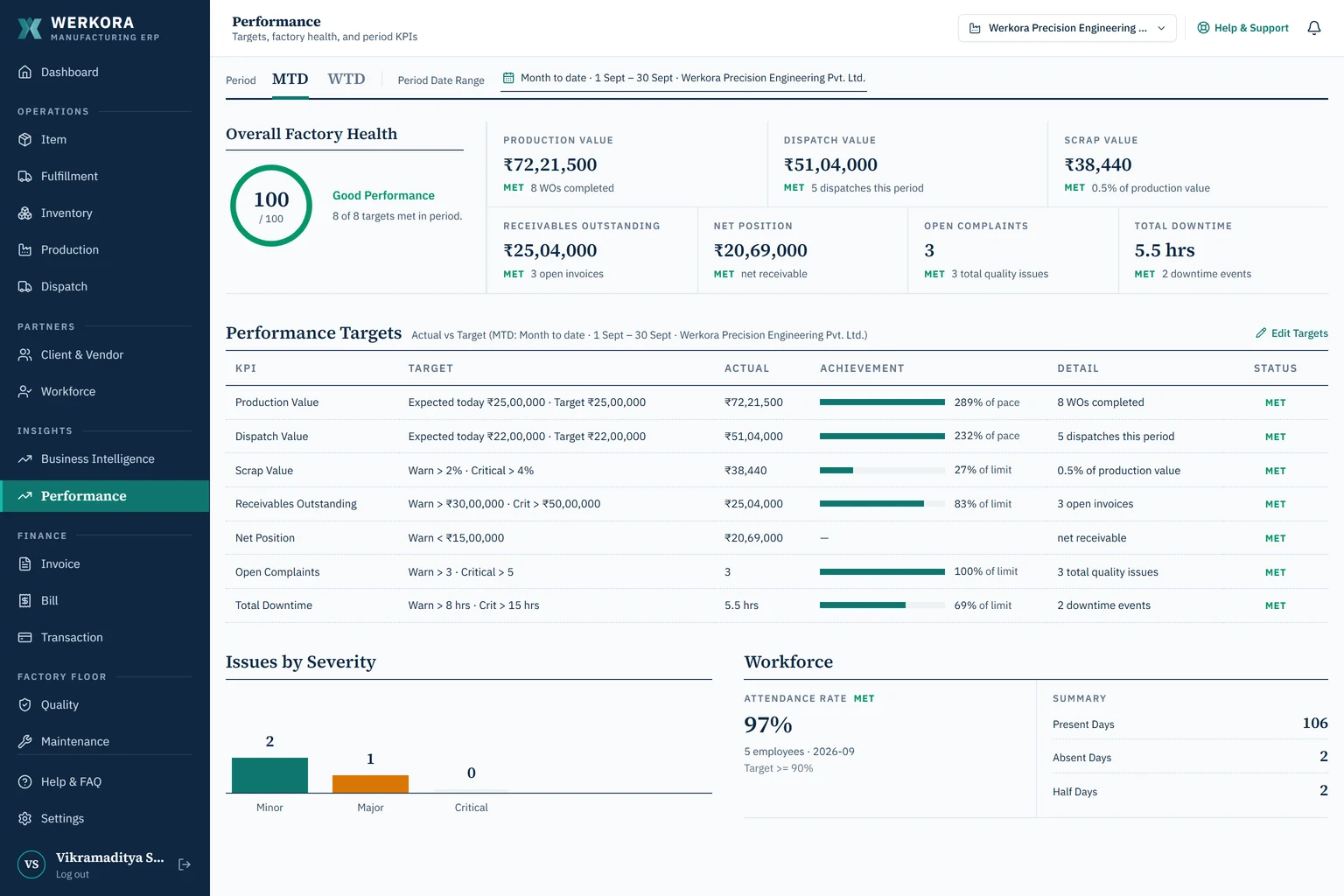
Werkora performance module — cost and variance reporting
AEO Quick Answer & Key Takeaway

Standard Price fixes valuation for a period, making variance analysis straightforward but distorting financial ledgers during commodity price swings. Moving Average Price recalculates unit cost after every receipt, providing accurate current balance sheet values. In practice, factories deploy Moving Average for volatile raw materials and Standard Price for manufactured goods.

Two Competing Inventory Valuation Philosophies

Inventory valuation dictates reported gross margins, tax liabilities, and working capital ratios. Evaluating whether to use Standard Price or Weighted Moving Average depends on the price volatility of the underlying commodities.

When to Deploy Moving Average Valuation

Moving average is ideal for purchased raw materials subject to frequent price changes (chemicals, steel coils, agricultural commodities), ensuring that inventory ledgers reflect true acquisition costs.

When to Deploy Standard Price Valuation

Standard price is effective for stable fabricated components and finished goods assemblies where production routines are consistent, providing clear variance metrics to evaluate factory performance.

Statutory Alignment with Indian Accounting Standard (AS 2)

Werkora allows finance teams to apply moving average valuation to raw materials and standard cost tracking to work-in-progress, complying with AS 2 and Ind AS 2 disclosure requirements.

Stop paying per-user software taxes in your factory

Werkora equips every shop-floor supervisor, line operator, storekeeper, and accountant with their own dedicated login with plans sized for your operation.

Frequently Asked Questions

Expert Answers for Factory Operations

Does Indian Accounting Standard (AS 2) allow standard costing?

Yes, provided the results approximate actual cost at the balance sheet date by allocating cumulative cost variances back to ending inventory and cost of goods sold.

How does Werkora calculate moving average upon Goods Receipt?

New Average Cost = [(Existing Stock × Old Average Cost) + (Received Quantity × Invoice Purchase Price)] / Total Combined Quantity.

AK

Abhishek Kumar

LinkedIn Profile

Senior Finance & ERP Systems Architect, Werkora

Senior accountant and enterprise systems specialist with 9+ years of experience across Indian GST/TDS compliance, SAP S/4HANA, Tally Prime, and finance automation. Direct operational background in precision instruments manufacturing and multi-jurisdictional statutory compliance with a zero-penalty record.

Cite this guide
APA, Markdown or BibTeX

Copy a citation to include this guide in your article or report.

Interactive Cost Comparison

Calculate Your Plant's Licensing Savings

Benchmark your current software bills against Werkora's unit-based pricing (10 users/unit · min 3 units).

Projected 3-Year Savings for Your Operation (3 Factory Units · 30 Users)

Save up to ₹6.8 Lakhs over 3 years

Compared to standard per-user seat pricing models like ERPNext ($13.50/user/mo).

Each unit includes 10 active user seats (Operations, Store, Accounts, Planning).

3

Base commitment minimum is 3 units (30 user seats total).

Commitment Term:

Werkora Plan

Werkora

₹14,997/mo (3 Units · 30 Seats)

Annual Cost

₹1,79,964

3-Year TCO

₹5,39,892

30 user seats (3 units × 10)

ERPNext Cloud

$13.50 / user / mo

Annual Cost (30 Users)

₹4,05,816

3-Year TCO

₹12,17,448

Save ₹6.8 Lakhs

TYASuite

₹499 / user / mo (~$6)

Annual Cost (30 Users)

₹1,79,640

3-Year TCO

₹5,38,920

Save ₹0

Zoho Creator

$8 / user / mo

Annual Cost (30 Users)

₹2,40,480

3-Year TCO

₹7,21,440

Save ₹1.8 Lakhs

SAP Business One

$50+ / user / mo

Annual Cost (30 Users)

₹15,03,000

3-Year TCO

₹45,09,000

Save ₹39.7 Lakhs

What's Included in Werkora's Plan (from ₹4,999/unit/mo · Min 3 Units):

10 Users per Factory Unit (30 Users in Base)
Minimum 3 Factory Units Included
GST Tax Invoices & Delivery Challans
BOM Formulation & Scrap Accounting
Customer, Supplier & Ledger Accounting
Batch FIFO Inventory Valuation
Shop Floor Travelers & Operation Routing
Extra Units at ₹4,999/mo (+10 users each)

Plan your ERP budget

Review the ERP buying guide or contact us to discuss the units, users, and deployment options your factory needs.

Related Manufacturing Playbooks

Explore adjacent topics in factory operations, costing, and statutory GST compliance.