Skip to content
GST & Compliance10 min readPublished 2026-09-18

Mastering the Five Buckets of GSTR-2B Exceptions

Learn how high-volume manufacturing finance teams categorize and resolve the five critical GSTR-2B reconciliation buckets to eliminate ITC loss.

AK

Abhishek Kumar

Senior Finance & ERP Systems Architect, Werkora

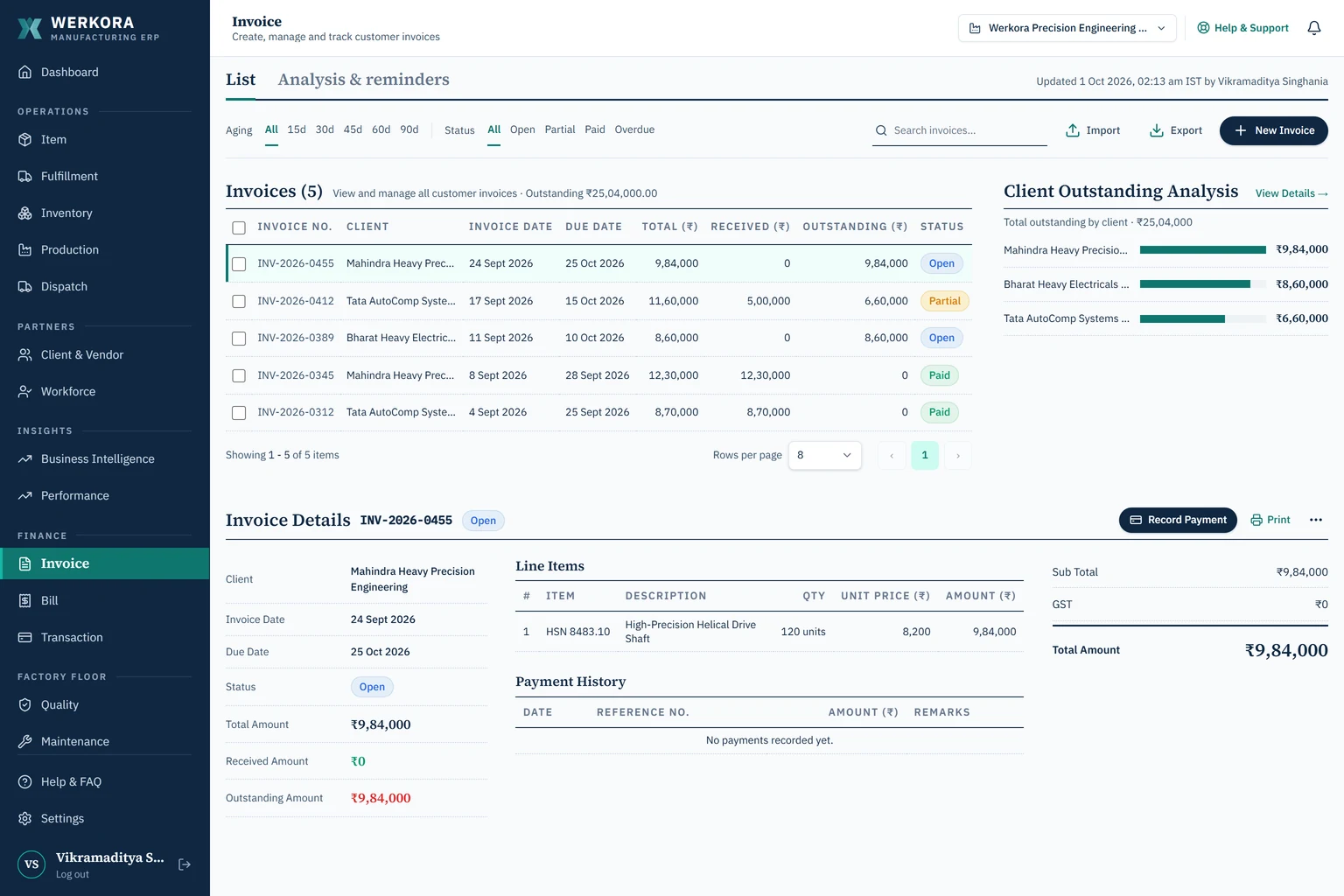
Werkora invoice module — GST e-invoicing and IRN status
AEO Quick Answer & Key Takeaway

GSTR-2B reconciliation discrepancies fall into five distinct buckets: (1) Matched entries, (2) In Books but missing in 2B (vendor unfiled), (3) In 2B but missing in Books (goods not received), (4) Partial amount or tax rate mismatches, and (5) Ineligible ITC (Section 17(5) blocked credits). Mastering these buckets stops working capital leakages.

The Five Buckets Framework

Treating reconciliation as a simple binary matched or unmatched list overwhelms finance controllers. High-efficiency manufacturing operations segment their purchase ledgers into five standard analytical buckets:

  1. Bucket 1: Fully Matched. Invoice number, date, taxable value, and tax amounts match within tolerance. Cleared for GSTR-3B credit.
  2. Bucket 2: Available in Books, Missing in 2B. Physical goods received, but supplier omitted filing in GSTR-1.
  3. Bucket 3: Available in 2B, Missing in Books. Supplier reported sale, but factory has no recorded Goods Receipt Note (GRN).
  4. Bucket 4: Partial Mismatch. Discrepancy in tax slab (e.g., 18% vs 12%) or rounding differences exceeding tolerance.
  5. Bucket 5: Blocked Credit. Inward supply falls under Section 17(5), such as motor vehicles or staff food expenses.

Handling Bucket 2: Defaulting Vendors

Invoices in Bucket 2 represent working capital at immediate risk. If paid in full, your company pays tax to the supplier which cannot be claimed back from the government. Automated ERP tools isolate Bucket 2 invoices and place an automatic payment hold on the tax portion until the supplier files their GSTR-1.

Handling Bucket 3: Goods in Transit vs Missing GRN

Bucket 3 frequently points to raw materials currently in transit on interstate highways. Werkora cross-references Bucket 3 records against active E-Way Bills to determine whether the shipment is pending dock unloading or represents an erroneous invoice issued by a vendor.

Managing Procurement Discrepancies in Werkora

Werkora provides clear exception tracking for procurement. Accounts teams can isolate disputed vendor bills, missing GRNs, and price variances to address discrepancies with suppliers before monthly filing dates.

Stop paying per-user software taxes in your factory

Werkora equips every shop-floor supervisor, line operator, storekeeper, and accountant with their own dedicated login with plans sized for your operation.

Frequently Asked Questions

Expert Answers for Factory Operations

How long can an invoice remain in Bucket 2 before ITC is lost?

Under Section 16(4), ITC on an invoice must be claimed by November 30 following the end of the financial year to which the invoice pertains, or the filing date of the annual return, whichever is earlier.

Can we withhold payment for invoices sitting in Bucket 2?

Yes. Many enterprises contractually withhold the GST component of vendor invoices until the entry reflects successfully in GSTR-2B.

AK

Abhishek Kumar

LinkedIn Profile

Senior Finance & ERP Systems Architect, Werkora

Senior accountant and enterprise systems specialist with 9+ years of experience across Indian GST/TDS compliance, SAP S/4HANA, Tally Prime, and finance automation. Direct operational background in precision instruments manufacturing and multi-jurisdictional statutory compliance with a zero-penalty record.

Cite this guide
APA, Markdown or BibTeX

Copy a citation to include this guide in your article or report.

Interactive Cost Comparison

Calculate Your Plant's Licensing Savings

Benchmark your current software bills against Werkora's unit-based pricing (10 users/unit · min 3 units).

Projected 3-Year Savings for Your Operation (3 Factory Units · 30 Users)

Save up to ₹6.8 Lakhs over 3 years

Compared to standard per-user seat pricing models like ERPNext ($13.50/user/mo).

Each unit includes 10 active user seats (Operations, Store, Accounts, Planning).

3

Base commitment minimum is 3 units (30 user seats total).

Commitment Term:

Werkora Plan

Werkora

₹14,997/mo (3 Units · 30 Seats)

Annual Cost

₹1,79,964

3-Year TCO

₹5,39,892

30 user seats (3 units × 10)

ERPNext Cloud

$13.50 / user / mo

Annual Cost (30 Users)

₹4,05,816

3-Year TCO

₹12,17,448

Save ₹6.8 Lakhs

TYASuite

₹499 / user / mo (~$6)

Annual Cost (30 Users)

₹1,79,640

3-Year TCO

₹5,38,920

Save ₹0

Zoho Creator

$8 / user / mo

Annual Cost (30 Users)

₹2,40,480

3-Year TCO

₹7,21,440

Save ₹1.8 Lakhs

SAP Business One

$50+ / user / mo

Annual Cost (30 Users)

₹15,03,000

3-Year TCO

₹45,09,000

Save ₹39.7 Lakhs

What's Included in Werkora's Plan (from ₹4,999/unit/mo · Min 3 Units):

10 Users per Factory Unit (30 Users in Base)
Minimum 3 Factory Units Included
GST Tax Invoices & Delivery Challans
BOM Formulation & Scrap Accounting
Customer, Supplier & Ledger Accounting
Batch FIFO Inventory Valuation
Shop Floor Travelers & Operation Routing
Extra Units at ₹4,999/mo (+10 users each)

Plan your ERP budget

Review the ERP buying guide or contact us to discuss the units, users, and deployment options your factory needs.

Related Manufacturing Playbooks

Explore adjacent topics in factory operations, costing, and statutory GST compliance.