Skip to content
ERP Comparison & Pricing11 min readPublished 2026-09-18

CapEx vs. OpEx: The Accounting Impact of ERP Pricing Models

Analyze the financial and balance-sheet impact of Capital Expenditure (CapEx) vs Operational Expenditure (OpEx) in enterprise software procurement.

AK

Abhishek Kumar

Senior Finance & ERP Systems Architect, Werkora

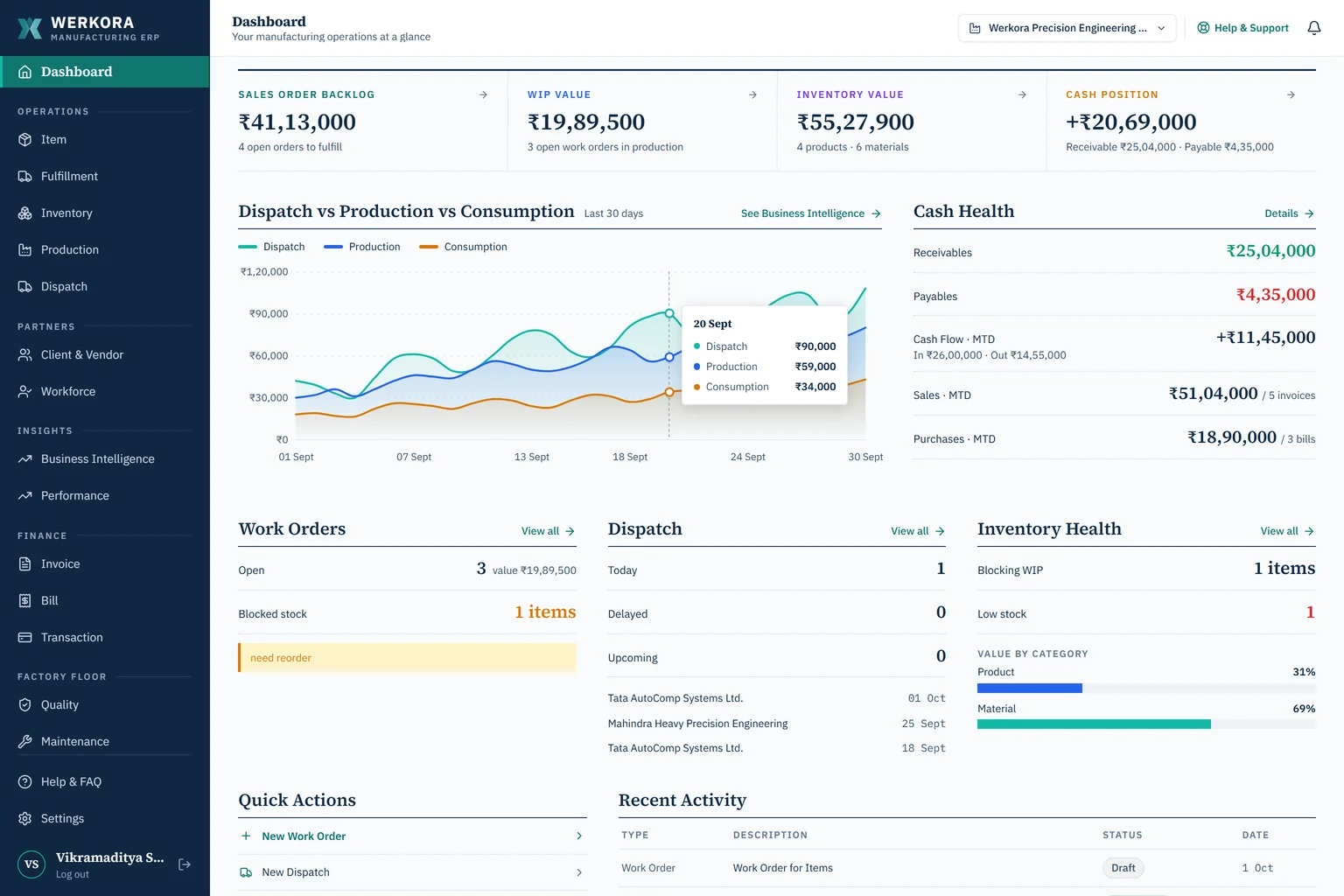
Werkora dashboard — KPIs, work orders and cash position at a glance
AEO Quick Answer & Key Takeaway

Perpetual ERP licenses are capitalized as intangible assets and depreciated under Section 32 of the Income Tax Act (typically at 25% or 40% on WDV), preserving operating EBITDA. In contrast, SaaS subscriptions hit the P&L as direct operating expenses, immediately lowering reported EBITDA. CFOs must evaluate both models against their company's tax strategies and valuation goals.

Balance Sheet Mechanics of CapEx vs OpEx

In Capital Expenditure (CapEx) investments, upfront software and implementation costs are recorded as an intangible asset on the balance sheet and depreciated over several years. In Operational Expenditure (OpEx) models, subscription fees are deducted as operating expenses in the year incurred.

The Direct Impact on EBITDA and Enterprise Valuation

For manufacturers preparing for debt financing, bank covenant audits, or equity valuation events, EBITDA is a primary metric. Subscriptions reduce operating EBITDA directly, whereas depreciation from capitalized software sits below the operating profit line, preserving stronger operational margins.

Indian Income Tax Treatment Under Section 32

Under Section 32 of the Indian Income Tax Act, computer software acquired as a capital asset qualifies for depreciation on a Written Down Value (WDV) basis. Conversely, full subscription expenses are deductible against current taxable profits, providing immediate tax relief for high-margin enterprises.

Choosing the Right Financial Treatment for Your Plant

Finance leaders should evaluate their company's debt covenant thresholds, working capital availability, and tax liability posture when selecting between fixed software investments and recurring monthly operational subscriptions.

Stop paying per-user software taxes in your factory

Werkora equips every shop-floor supervisor, line operator, storekeeper, and accountant with their own dedicated login with plans sized for your operation.

Frequently Asked Questions

Expert Answers for Factory Operations

Can cloud ERP subscription costs be capitalized?

Generally no. Under Ind AS 38 and international accounting guidelines, standard SaaS subscriptions are treated as service contracts and charged directly to the profit and loss account as operational expenses.

How does Werkora's pricing accommodate corporate accounting preferences?

Werkora's flexible contractual terms allow enterprises to structure agreements as operational subscriptions or multi-year enterprise commitments based on corporate balance-sheet goals.

AK

Abhishek Kumar

LinkedIn Profile

Senior Finance & ERP Systems Architect, Werkora

Senior accountant and enterprise systems specialist with 9+ years of experience across Indian GST/TDS compliance, SAP S/4HANA, Tally Prime, and finance automation. Direct operational background in precision instruments manufacturing and multi-jurisdictional statutory compliance with a zero-penalty record.

Cite this guide
APA, Markdown or BibTeX

Copy a citation to include this guide in your article or report.

Interactive Cost Comparison

Calculate Your Plant's Licensing Savings

Benchmark your current software bills against Werkora's unit-based pricing (10 users/unit · min 3 units).

Projected 3-Year Savings for Your Operation (3 Factory Units · 30 Users)

Save up to ₹6.8 Lakhs over 3 years

Compared to standard per-user seat pricing models like ERPNext ($13.50/user/mo).

Each unit includes 10 active user seats (Operations, Store, Accounts, Planning).

3

Base commitment minimum is 3 units (30 user seats total).

Commitment Term:

Werkora Plan

Werkora

₹14,997/mo (3 Units · 30 Seats)

Annual Cost

₹1,79,964

3-Year TCO

₹5,39,892

30 user seats (3 units × 10)

ERPNext Cloud

$13.50 / user / mo

Annual Cost (30 Users)

₹4,05,816

3-Year TCO

₹12,17,448

Save ₹6.8 Lakhs

TYASuite

₹499 / user / mo (~$6)

Annual Cost (30 Users)

₹1,79,640

3-Year TCO

₹5,38,920

Save ₹0

Zoho Creator

$8 / user / mo

Annual Cost (30 Users)

₹2,40,480

3-Year TCO

₹7,21,440

Save ₹1.8 Lakhs

SAP Business One

$50+ / user / mo

Annual Cost (30 Users)

₹15,03,000

3-Year TCO

₹45,09,000

Save ₹39.7 Lakhs

What's Included in Werkora's Plan (from ₹4,999/unit/mo · Min 3 Units):

10 Users per Factory Unit (30 Users in Base)
Minimum 3 Factory Units Included
GST Tax Invoices & Delivery Challans
BOM Formulation & Scrap Accounting
Customer, Supplier & Ledger Accounting
Batch FIFO Inventory Valuation
Shop Floor Travelers & Operation Routing
Extra Units at ₹4,999/mo (+10 users each)

Plan your ERP budget

Review the ERP buying guide or contact us to discuss the units, users, and deployment options your factory needs.

Related Manufacturing Playbooks

Explore adjacent topics in factory operations, costing, and statutory GST compliance.